 The Startup Lifecycle · Exit
Gregory Shepard’s Exit Pocket Guide
Would your company
keep working
without you?

You built it. Now make it possible for someone else to carry it forward.
Learn with Gregory, then use his six practical worksheets to find the decisions, relationships and processes that still come back to you.
How Gregory approached Exit
Gregory worked backward
from the buyer.
When rebuilding AffiliateTraction, Gregory identified the kinds of companies that might buy it, studied their customers, and pursued brands that would demonstrate a fit with those buyers.
He also documented the business and tracked what the team tried. The potential buyer helped shape the operating plan, before there was a deal.
Bring it back to your business.
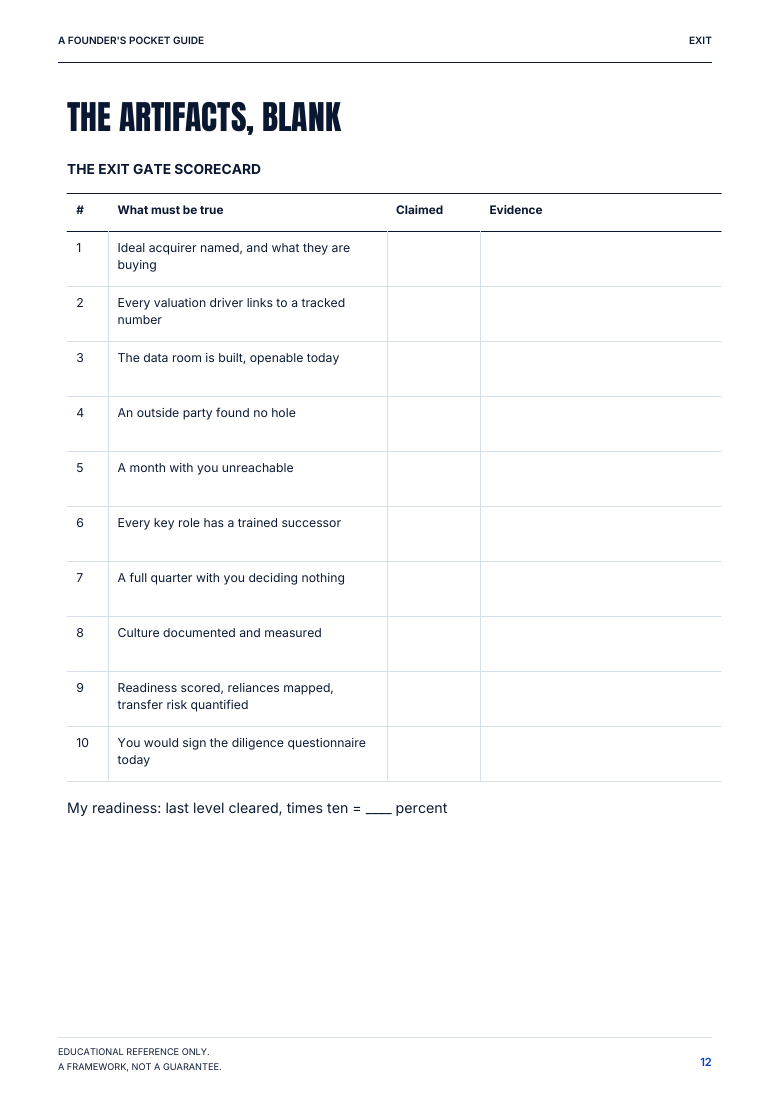
The guide’s first Exit gate asks you to name your ideal acquirer and the reason they would buy. Then put the evidence beside the claim.
What would that buyer need to see, and could someone else take over the systems that deliver it? That is the work the remaining worksheets help you identify.
At the whiteboard
A strong business can still
depend on one person.

The guide’s readiness equation combines system maturity, documentation and founder reliance. Hold the first two steady, and watch what reliance does.
Illustration of the guide’s formula. Not company performance or a valuation forecast.
Start with one recurring decision. Who could own it next, and what would they need to act without asking you?
Work through it with the free guide ↑Inside your free guide
From Gregory’s framework
to your next handoff.
A founder story, a visual lesson and six worksheets. Use the guide to put the remaining work on paper.
Check the ten Exit gates.
Separate what you can claim from what you can show.
Find the transfer risks.
Examine documentation, founder reliance and system ownership.
Put the handoff on paper.
Use the data-room, valuation and succession worksheets to choose the work that comes next.
The Exit Pocket Guide
16 pages · Free PDF
By Gregory Shepard